In short
- Always weigh and measure packages with box, tape, and protective fillers included before filling out your listing's packed dimensions and package preferences.
- Use calculated shipping for items with varying weights or long-distance destinations to prevent paying carrier shortfalls out of pocket.
- Include packaging material costs directly inside profile handling fees to protect base profit margins on every order.
- Group similar products under standardized shipping profiles to make shop-wide handling time edits instantaneous.
On this page
- Map actual mailer dimensions to prevent carrier adjustment fees
- Add handling costs directly into your profile settings
- Configure calculated shipping rules versus flat rate templates
- Set combined shipping discounts for multi-item orders
- Standardize mail classes and processing times across listings
- Frequently Asked Questions
- References
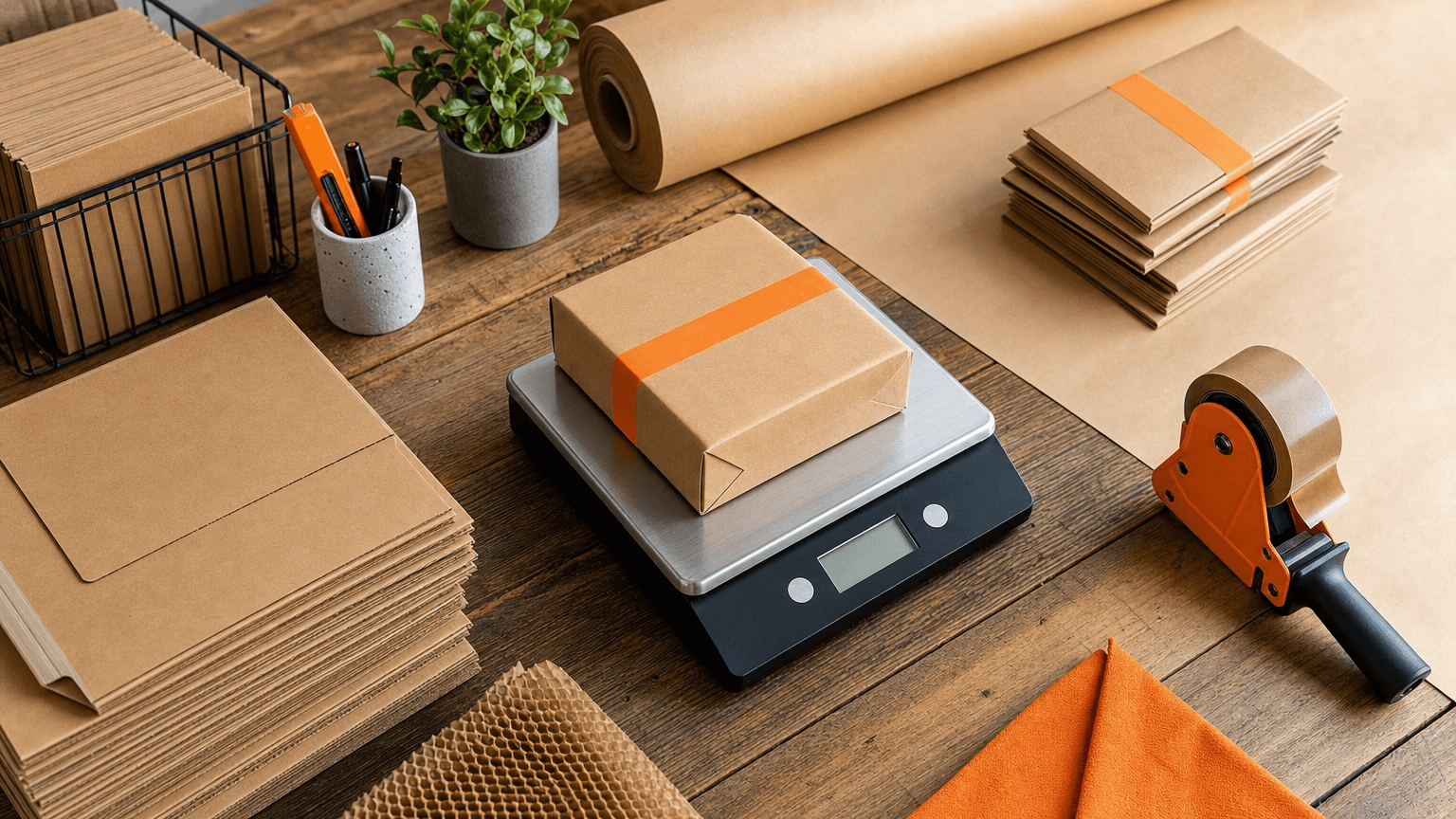
Set up your shipping strategy by entering precise package dimensions on your listings, saving mailer sizes in your package preferences, and adding dedicated handling fees to your shipping profiles to prevent unexpected carrier expenses.
Shipping mistakes quietly bleed seller profits. When box sizes are estimated or mailer weight is overlooked, postal carriers pass carrier adjustment charges directly to your shop balance. Building precise, repeatable shipping profiles protects margins while making item publishing faster and more predictable.
Map actual mailer dimensions to prevent carrier adjustment fees
Carrier adjustment fees happen when automated laser scanners at sorting hubs detect packages larger than the dimensions entered when purchasing your shipping label. Measuring your outer box or bubble mailer after packing—including tape bulge and stuffed corners—ensures calculated shipping charges buyers accurately, protecting your shop margins from unexpected postage underpayment charges.
Manufacturer dimensions printed on box flaps reflect interior size, not the exterior footprint scanning machines read. Even a fraction of an inch from packed bubble wrap can push your shipment into a higher dimensional weight tier. Use our [Etsy profit calculator](s://www.optimsy.com/en/free-tools/profit-calculator) to see how small carrier back-charges quietly drain your shop earnings.
Pack a standard item completely with void fill and seal the box.
Measure length, width, and height across the widest bulges.
Round up each measurement to the nearest whole inch per carrier rules.
Enter these packed dimensions into your default item package size settings.
See also: Etsy profit calculator.

Add handling costs directly into your profile settings
To cover your actual packaging costs without losing margin, Etsy lets you add a handling fee directly inside your shipping profiles, or you can bake those expenses into your item's base price. Factoring mailer boxes, bubble wrap, label paper, and gas into your shipping setup ensures every sale covers full fulfillment expenses.
Deciding where to place these costs depends on your shipping strategy. When using Etsy calculated shipping, enter a separate handling fee directly into your shipping profile settings so Etsy adds your box and padding expenses to the buyer's rate automatically. If you offer free shipping or flat rates, you must [price handmade items for profit](s://www.optimsy.com/en/blog/price-handmade-items-etsy-profit) by folding those exact supply costs into the item's retail listing price instead.
Profile handling fee: Best for calculated shipping on standard orders where mailer, tape, and label costs are predictable.
Base listing price: Best for free shipping listings or fragile items that demand extra bubble wrap and custom outer boxes.
See also: price handmade items for profit.
Configure calculated shipping rules versus flat rate templates
Choosing between calculated shipping and flat rate templates depends on item weight and distance variability. Use calculated shipping for heavy or bulky items where cross-country postage swings drastically. Use flat rate profiles for light, uniform items like stickers or jewelry where postage costs stay consistent regardless of buyer location.
Decision Rules for Your Shop
Calculated shipping: Use for items weighing over 1 lb or requiring large boxes (e.g., ceramic mugs, wooden signs). Input exact box dimensions and packed weight so Etsy calculates precise rates by buyer zip code, preventing undercharging on distant orders.
Flat rate templates: Use for items under 8 oz (e.g., enamel pins, paper prints). Regional price variances for first-class light mailers are negligible, making fixed rates faster to set up and manage.
Correct profile selection keeps your margins predictable across every zone. Before locking in your settings, evaluate how [shipping charges and rank](s://www.optimsy.com/en/blog/etsy-shipping-ranking-2026) interact across search results so your profile strategy supports both listing visibility and shop profitability.
See also: shipping charges and rank.
Set combined shipping discounts for multi-item orders
To set up combined shipping discounts for flat rate profiles, edit your Etsy shipping profile and enter a reduced rate in the "One item" vs. "Additional item" fields. The primary price covers your base box and baseline weight, while the additional item fee accounts only for the incremental weight and extra packaging material.
Undercharging on combined shipping burns your profit when you need a larger box, but overcharging scares buyers away at checkout. Use a simple formula for your Additional item rate: take the postage cost difference between one item and two items in the same package, then add any price difference for a larger shipping box.
Applying Combined Shipping in Shop Manager
Go to Shop Manager > Settings > Shipping settings > Shipping profiles.
Edit your profile and set your full shipping cost under One item.
Enter your calculated incremental cost under Additional item.
Save the profile to automatically apply these combined rates across every listing linked to that profile.
Standardize mail classes and processing times across listings
Standardizing your mail classes and processing times through master shipping profiles allows you to update fulfillment settings across hundreds of listings instantly. Instead of editing items individually during Q4 surges, linking listings to central profiles lets you adjust handling times shop-wide in two clicks.
When holiday order volumes spike or supply chains slow down, manually changing handling times on fifty individual listings wastes hours and invites missed deadlines. Etsy calculates your estimated delivery dates directly from your profile settings, so accuracy protects your Star Seller status.
How to bulk-update handling times during peak periods
Group listings by actual production effort (e.g., assign ready-to-ship items to a '1-2 Business Days' profile and custom orders to a '3-5 Business Days' profile).
When order volume exceeds your daily capacity, navigate to your Shipping Settings and edit the single master profile rather than individual listings.
Increase the processing time on that master profile from '1-3 days' to '3-5 days'. Etsy automatically updates the estimated delivery date on every attached listing immediately.
Using standardized profiles prevents shipping delays from hurting your shop's standing while saving you from repetitive admin work when you need to focus on packing boxes.
Frequently Asked Questions
What is the difference between calculated shipping and flat rate on Etsy?
Calculated shipping automatically determines postage costs at checkout using package dimensions, total item weight, and buyer zip code. Flat rate shipping charges a fixed price set manually by the seller regardless of destination zone. Calculated shipping prevents losses on long-distance shipments, while flat rate suits lightweight products.
How do handling fees work inside Etsy shipping profiles?
Handling fees are added to calculated shipping profiles to cover expense items like shipping boxes, poly mailers, tissue paper, bubble wrap, and transport fuel. Etsy adds this specified amount directly to the carrier rate displayed to the buyer during checkout, ensuring your fulfillment overhead remains fully covered.
What happens if package dimensions on Etsy are inaccurate?
Inaccurate package dimensions can cause carriers to issue postage adjustment charges after shipment processing. Mail services weigh and scan parcels in transit, automatically debiting your Etsy payment account for postage deficits if your package turns out larger or heavier than indicated on the purchased shipping label.
References
Does the new price keep your margin?
Enter your price, shipping and costs; Etsy fees are calculated for you.
Open the Profit CalculatorNo sign-up needed
Emirhan Sevim
Co-founder of Optimsy. Builds tools that help Etsy sellers make listing, pricing and niche decisions with data.
About Optimsy →